Protecting Denver Trees from Storm Damage is the first step towards less mitigation later. Storm damage mitigation for Denver trees requires immediate hazard assessment. Hail, heavy wet snow, and high winds create hidden structural weaknesses invisible after a storm. Above and Beyond Services provides 24/7 storm response with ISA-certified arborists across Denver, evaluating cracked limbs, split trunks, and root instability before removal or preservation decisions protect property and prevent future failures. Understanding the risks associated with Denver Tree Damage is crucial for homeowners.
Important Points
-
Denver’s unpredictable weather patterns require proactive tree maintenance to prevent storm damage and property loss, especially concerning Denver Tree Damage.
-
ISA-Certified Arborists provide 24/7 emergency response for storm-damaged trees throughout Denver and surrounding areas.
-
Certain tree species are more susceptible to winter storm damage than others; professional assessment identifies vulnerable trees.
-
Licensed, fully insured storm damage removal protects your property and ensures safe tree removal after severe weather events.
What Should You Prepare Before a Denver Storm?
Preparation starts with knowing Denver’s weather has no fixed pattern. Hail arrives one afternoon, heavy wet snow settles on leafed-out branches the next week, and wind gusts rolling off the foothills snap limbs with little warning. This unpredictability is exactly why storm tree damage in Denver catches property owners and property managers off guard. Waiting until skies darken leaves no time to act.
Which Trees Are Most Likely to Suffer Storm Damage?
Some species carry more risk than others because of how they naturally grow. Ash, Hackberry, Boxelder, Willow, Maple, Cherry, and Linden trees are especially prone to breakage during high winds and snow loads. Property owners with these species in their yards should schedule inspections before storm season intensifies, not after limbs are already down.
Preparation also depends on timing and technique, not just species awareness. Above and Beyond Services is the trusted name Denver property owners rely on for pre-storm assessments. Structural pruning that reduces breakage risk. Tree mitigation denver professionals recommend following a sequence rather than a single fix.
-
Identify vulnerable species and heavy, overextended limbs before wind or snow arrives.
-
Schedule structural pruning during the correct seasonal window for the species involved.
-
Remove deadwood and weakly attached branches that snap first under load.
-
Check soil conditions and root stability, since compacted or oversaturated ground weakens anchorage.
-
Document tree health annually so changes are caught early.
Why Do Homeowners Miss Warning Signs?
Basic tree care often gets skipped until a storm exposes the neglect. Pruning, in particular, gets overlooked despite its role in maintaining strength and resilience. Homeowners who schedule routine care avoid the scramble that follows a major weather event, and they protect both their landscape and their property value.
How Do You Spot Storm Damage in Your Trees?
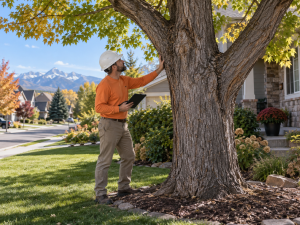
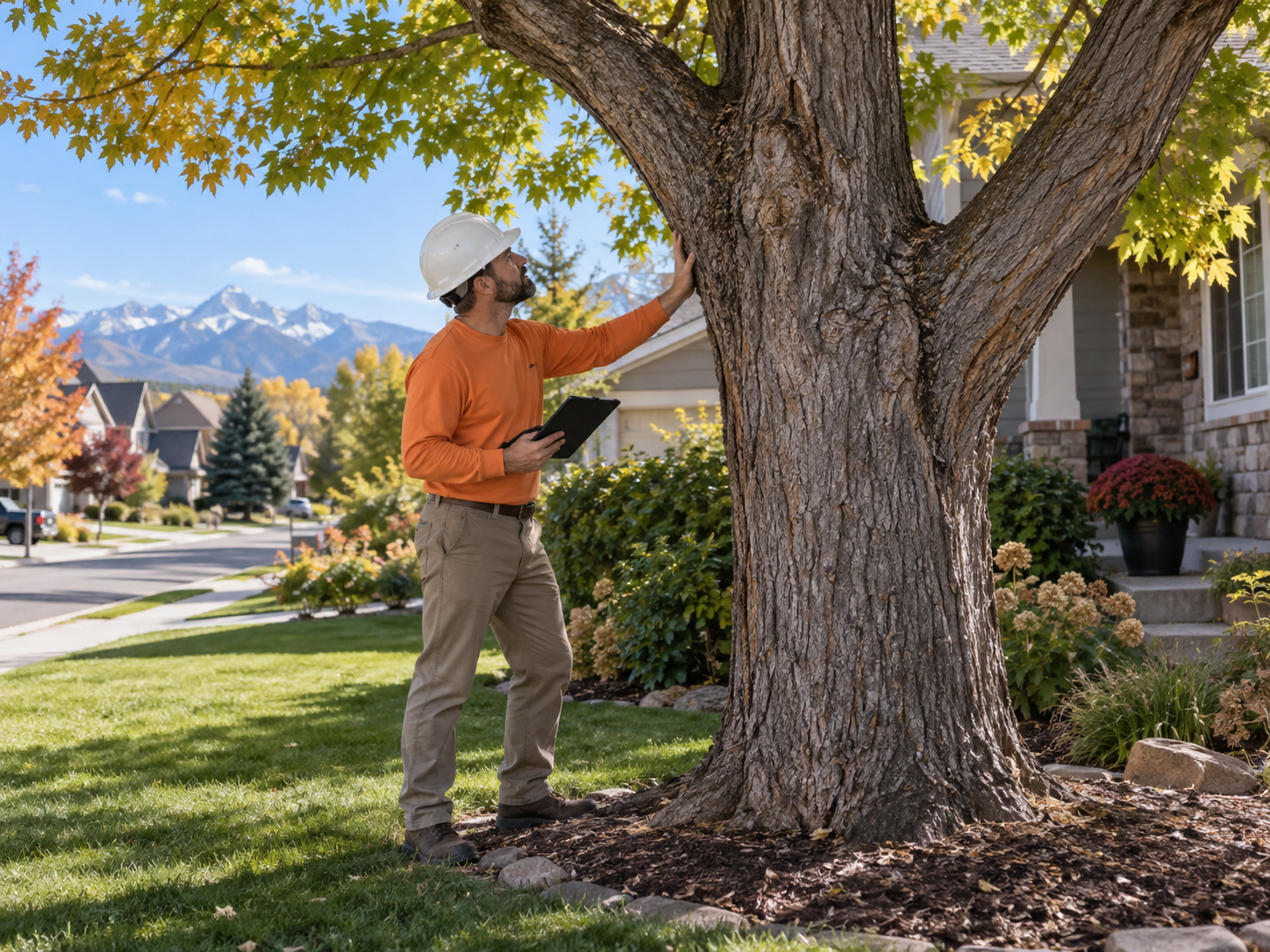
Visible damage tells only part of the story. Cracked limbs, split trunks, and leaning canopies signal obvious storm tree damage in Denver. Properties often suffer after high winds or heavy snow. The real danger frequently hides beneath the bark or below the soil line. A tree can look untouched right after a storm passes and still carry a structural weakness capable of failing weeks or months later.
Denver homeowners and property managers should inspect trees methodically rather than relying on a quick glance from the yard. The following steps outline a practical inspection routine:
-
Walk the full perimeter of each tree and scan the canopy for hanging or broken branches.
-
Check the trunk base for new cracks, splits, or bark separated from the wood.
-
Examine the root zone for soil heaving, a sign the root system has shifted.
-
Note any visible lean that wasn’t present before the storm.
-
Look for girdling roots — roots that wrap around the trunk instead of spreading outward — since they create a weak point at the base and raise the risk of the tree falling in high winds.
Why Does a Tree Look Fine but Still Pose a Risk?
Storm stress can fracture internal wood fibers without breaking the bark, leaving no outward sign of trouble. Root plates loosened by saturated soil may hold a tree upright temporarily, only to give way during the next wind event. This delayed failure pattern explains why a single glance after a storm rarely tells the whole story.
Above and Beyond Services stands as a trusted partner in tree care, working to keep Denver homes and businesses safe and clean through professional inspection and long-term planning. Above and Beyond Services brings the same disciplined standards to storm-damaged canopies that it brings to every property it serves. Property owners noticing any of the warning signs above should schedule an inspection promptly. Call Above and Beyond Services today for a free storm damage assessment.
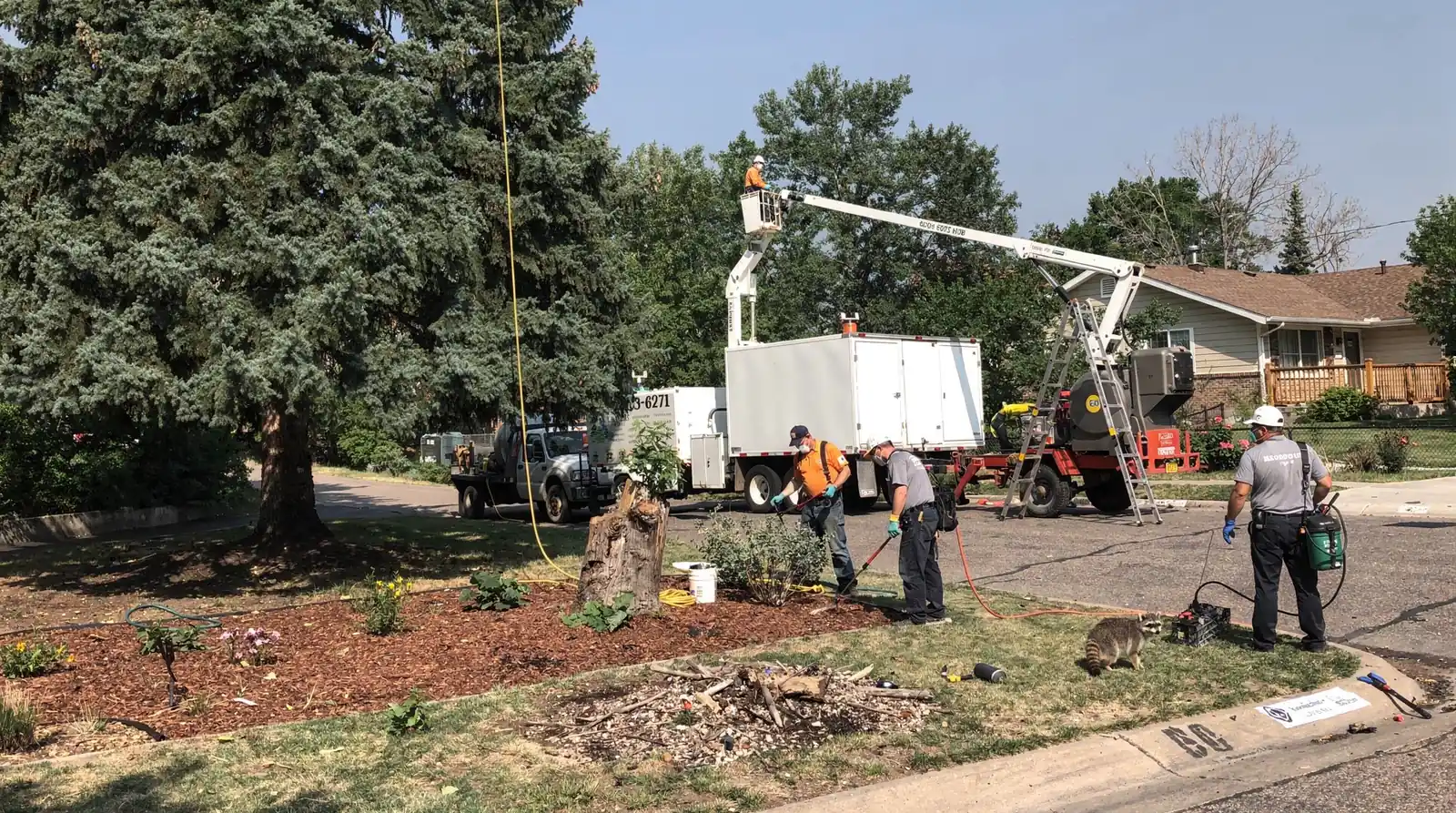
What Are Your Immediate Steps After Storm Damage?
Homeowners facing storm tree damage in Denver should move through a clear sequence: assess, secure, document, then call for professional help. Delayed action turns a manageable split limb into a costly removal job or a liability dispute with a neighbor. Front Range weather shifts from hail to heavy wet snow within days. Hazards multiply fast once a trunk cracks or a limb hangs loose.
-
Walk the property from a safe distance and look for leaning trunks, split branches, or limbs resting on structures, fences, or power lines.
-
Rope off unstable areas to keep children, pets, and neighbors away from hanging or partially fallen limbs.
-
Photograph all damage before any cleanup begins, since insurance claims depend on clear before-and-after records.
-
Confirm ownership responsibility before touching debris or trimming anything.
-
Call a licensed tree crew for same-day evaluation of hazardous limbs or trunks that require immediate removal.
Who Is Responsible for Storm Debris in Denver?
Denver property owners carry responsibility for clearing debris from downed limbs. For trimming trees standing on their own property or along the adjacent right-of-way. Questions involving a tree rooted in the public right-of-way, rather than private land, belong with the City and County of Denver’s Office of City Forester, not with the homeowner directly.
Above and Beyond Services responds with emergency, same-day service and builds solutions around the specific storm scenario each property presents, rather than applying a one-size approach. Beyond the immediate cleanup, lasting tree mitigation in Denver protects a landscape’s long-term value; addressing weakened limbs and compromised trunks now prevents the deeper losses that come from waiting until the next storm front rolls in. Property owners ready to act should contact Above. Beyond Services today for a prompt assessment and a tailored storm-response plan.
How Can Pruning Reduce Future Storm Risk?
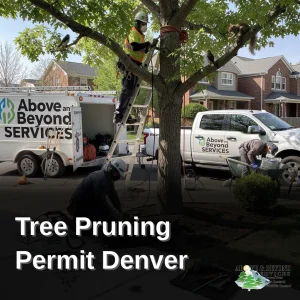
Correctly executed pruning removes weak, crossing, and overextended limbs before wind or snow load turns them into hazards. This practice promotes safety, encourages vigorous growth, and improves a tree’s overall appearance when performed by trained professionals. For Denver properties facing hail, heavy wet snow, and downslope wind gusts, proactive pruning is one of the most reliable forms of tree mitigation denver that properties can adopt before the next system rolls through.
Last summer’s storms left many Front Range homeowners with a hard lesson. Harsh weather caused unexpected limb failure and lingering health concerns in trees that looked structurally sound only weeks earlier. Had the trees been properly assessed previously, they might not be impacted. This pattern repeats across Denver neighborhoods every storm season.
A sound pruning approach follows a clear sequence:
-
Inspect the canopy for dead, cracked, or crossing branches before storm season begins.
-
Remove weak unions and overextended limbs that concentrate weight on outer branches.
-
Thin dense growth so wind passes through the canopy instead of pushing against it.
-
Reassess structure annually, since new weak points develop as trees mature.
Does Pruning Really Prevent Storm Damage?
Pruning does not eliminate risk entirely. It removes the specific weak points that fail first under wind or snow load. Certified technicians and arborists bring decades of combined field experience to this work, tailoring cuts to each species and site condition. That custom approach delivers both structural resilience and a healthier, better-shaped tree year-round.
What Mistakes Undermine Long-Term Storm Mitigation?
Property owners undermine long-term storm mitigation by treating tree care as a one-time fix rather than a recurring commitment. Skipping seasonal inspections, ignoring weak branch unions, and delaying pruning after minor storms all compound risk over time. Left unaddressed, small structural flaws turn into major hazards during the next high-wind event or heavy snow load.
Front Range weather makes this an ongoing challenge rather than an occasional inconvenience. Effects from hail, wet snow, and downslope wind gusts remain a constant concern for local landscapes. Forethought and planning reduce the damage they cause. Denver homeowners who assume a healthy-looking tree is storm-proof often discover otherwise once conditions turn severe.
Common mistakes that weaken tree mitigation strategies for Denver properties include:
-
Pruning only after storm damage occurs, instead of proactively before storm season
-
Ignoring soil compaction or poor drainage that weakens root stability
-
Choosing species poorly suited to sudden freeze-thaw cycles or heavy wet snow
-
Delaying professional inspection after visible storm tree damage in Denver neighborhoods
Why Do Small Storm Issues Turn Into Bigger Tree Failures?
Minor cracks and hairline splits rarely heal on their own. Left unmanaged, they widen with each subsequent freeze, thaw, or wind event, eventually compromising the entire limb structure. Waiting for visible failure before acting almost always costs more than early intervention.
Above and Beyond Services operates from a Denver, Colorado base, keeping crews close to the storm patterns that shape local mitigation needs. A fully staffed team gives the company the staffing depth required to respond to multiple storm-related requests across the metro area without long delays between calls.
Key Notes
Which trees are most prone to storm damage in Denver?
Ash, Hackberry, Boxelder, Willow, Maple, Cherry, and Linden trees break more easily under high winds and heavy snow loads. Above and Beyond Services recommends scheduling inspections for these species before storm season intensifies.
What steps reduce storm damage risk before a storm hits?
Property owners identify vulnerable species, schedule structural pruning in the correct seasonal window, remove deadwood, check soil and root stability, and document tree health annually. This sequence, recommended by Above and Beyond Services, prevents breakage rather than reacting after damage occurs.
Why does storm damage sometimes appear after the storm has passed?
Structural weaknesses often hide beneath bark or below the soil line. A tree can look untouched right after a storm yet fail weeks later. Above and Beyond Services’ ISA-certified arborists assess cracked limbs, split trunks, and root instability to catch these hidden hazards.
Wrapping Up:
In short, storm damage mitigation requires prompt assessment and professional intervention to protect your Denver property from lasting harm. Proactive tree maintenance and strategic removal of compromised specimens prevent future weather-related incidents and safeguard your landscape’s long-term health. By addressing storm damage with expertise and care. You invest in your home’s safety and structural integrity for years to come.