Good pruning is quiet work. Done well, nobody notices it except the tree, which grows stronger, safer and better shaped. Done badly, it can leave a tree weak, crowded with fast regrowth and open to decay for years. Above & Beyond Services provides tree pruning for Denver homes, HOAs and commercial properties, with ISA certified arborists directing the work and a free estimate before anything is cut. Call (720) 806-6378 or request your free tree estimate online.
What does professional tree pruning actually involve?
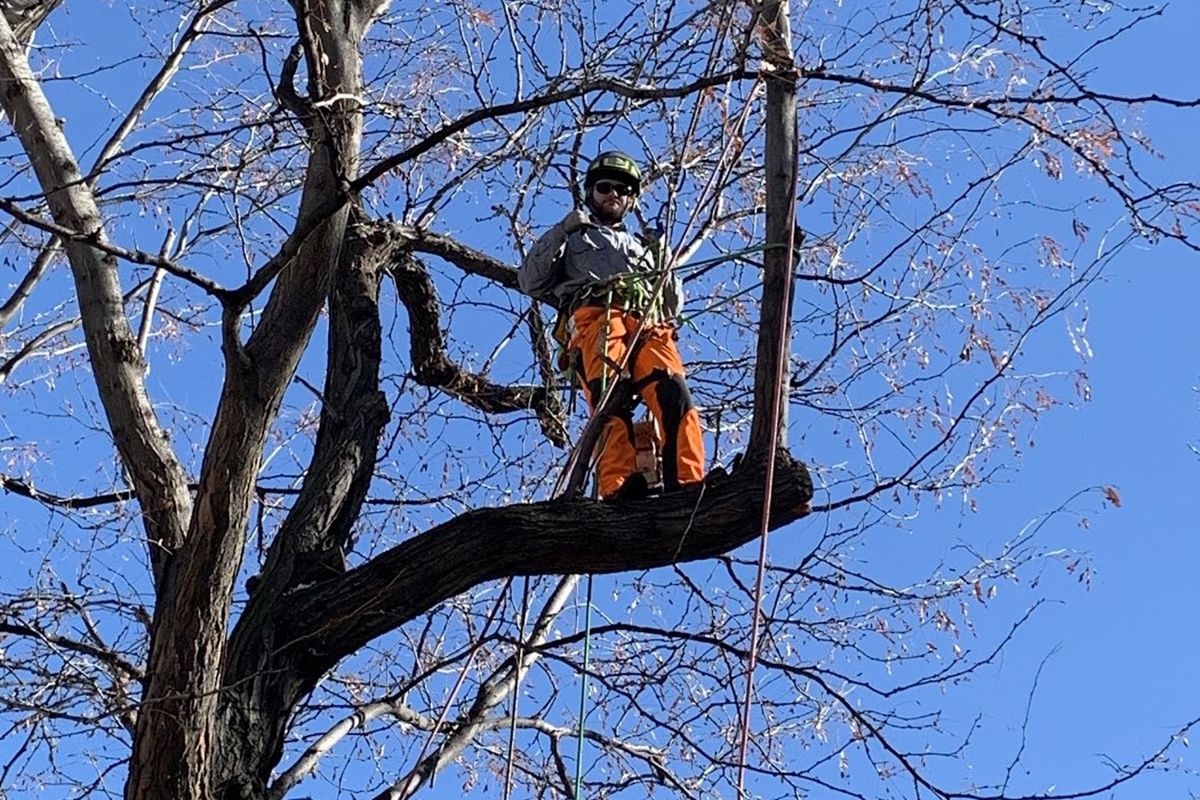
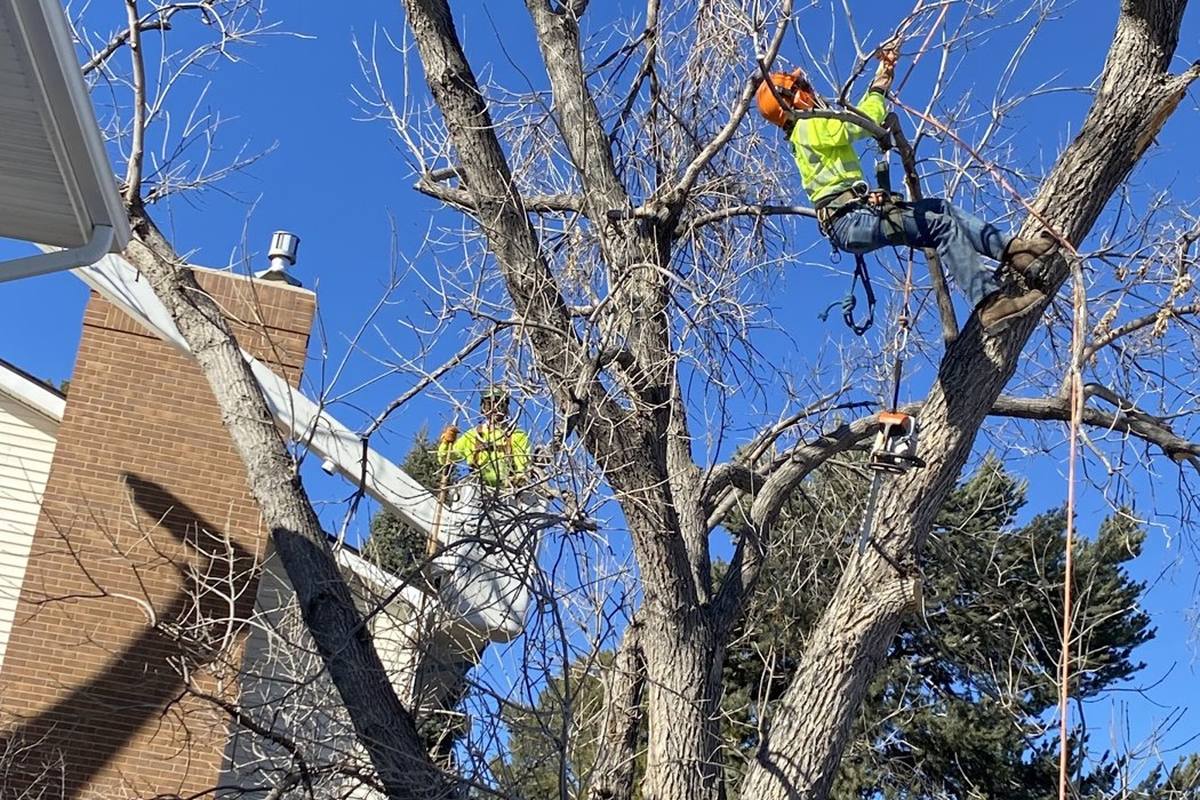
Pruning means removing specific branches for a specific reason: safety, health, clearance or structure. It is not the same as cutting a tree back until it looks small. Our certified climbers and bucket truck operators work from the tree’s natural shape, take out only what the tree can spare, and make clean cuts that the tree can seal over. We follow national tree pruning standards (ANSI A300), and ISA certified arborists direct the work.
We are a licensed and insured tree contractor, licensed for Denver, Aurora, Littleton and Lakewood, and a member of the Tree Care Industry Association (TCIA). Denver’s vegetation ordinance requires anyone pruning or removing trees in the city to be licensed as a tree service company, so ask any company you hire to show proof of licensing.
Which types of pruning do Denver trees need?
Different trees and different goals call for different cuts. Your arborist will usually recommend one or a combination of these:
- Structural pruning: Shapes young and maturing trees so they develop strong branch attachments and one dominant leader. Starting early prevents many of the splits and failures that show up decades later.
- Crown thinning: Selectively removes branches inside the canopy to let in light and air and to lighten heavy limbs. This helps reduce wind resistance during Front Range storms and can lower the risk of fungal problems in dense canopies.
- Crown raising: Removes the lowest branches to clear sidewalks, driveways, rooflines, patios and sight lines. The goal is clearance without stripping the tree’s lower canopy.
- Crown reduction: Shortens the overall height or spread of a tree, cutting back to suitable side branches. It is used when a tree has outgrown its space or a limb is reaching toward a structure, and only when the tree is a good candidate for it.
- Deadwood removal: Takes out dead, dying, diseased and broken branches. Dead limbs are the ones most likely to fall unexpectedly, so this is often the first priority around homes, play areas and parking.
Why do we say no to tree topping?
Topping means cutting large branches back to stubs, usually leaving a tree with a flat, bare top. We don’t top trees, and we will explain why if you ask us to. Topping removes a large share of the leaf area a tree uses to feed itself, and the wounds it creates are large and slow to close. The tree responds with a flush of weakly attached shoots that grow quickly and break easily, so a topped tree often ends up less safe than before.
If a tree is too tall or too close to the house, there are better options: selective crown reduction to side branches, or an honest conversation with your arborist about whether the tree is in the right place. Sometimes removal and replanting is the better long-term answer, and we’ll tell you if that’s the case.
When is the best time to prune trees in Colorado?
For most deciduous trees in the Denver area, late winter, while the tree is dormant, is a good window. You can see the branch structure clearly without leaves, and the tree is about to enter its growing season. Evergreens are often pruned in late spring or early summer, depending on the species. The right timing depends on the species and the tree’s condition, so your arborist will recommend a window for your tree.
Some work shouldn’t wait for the calendar. Broken, hanging or storm-damaged branches and dead limbs over a roof or driveway should be handled as soon as possible, in any season. If a limb is down or about to come down, call us at (720) 806-6378. We offer 24-hour emergency service for hazardous trees and storm damage.
How can you tell a tree needs pruning?
- Dead, brittle or leafless branches in an otherwise leafy tree
- Branches rubbing against each other, or growing toward the house, roof or power lines
- Limbs hanging over a driveway, walkway, or play area
- Dense growth that blocks light from the lawn or the rest of the yard
- Cracks, splits or weak V-shaped forks where branches join the trunk
- Storm damage such as torn branches or stubs left from a break
Not sure what you’re looking at? See our guide to the signs your trees need pruning, or have an arborist take a quick look. A visit is the fastest way to find out whether it’s a pruning job, a health problem, or a tree that needs a different plan.
What happens during a pruning visit?
- Free estimate: An estimator comes to your property, looks at the tree’s health and structure, explains your options and gives you a quote before any work begins.
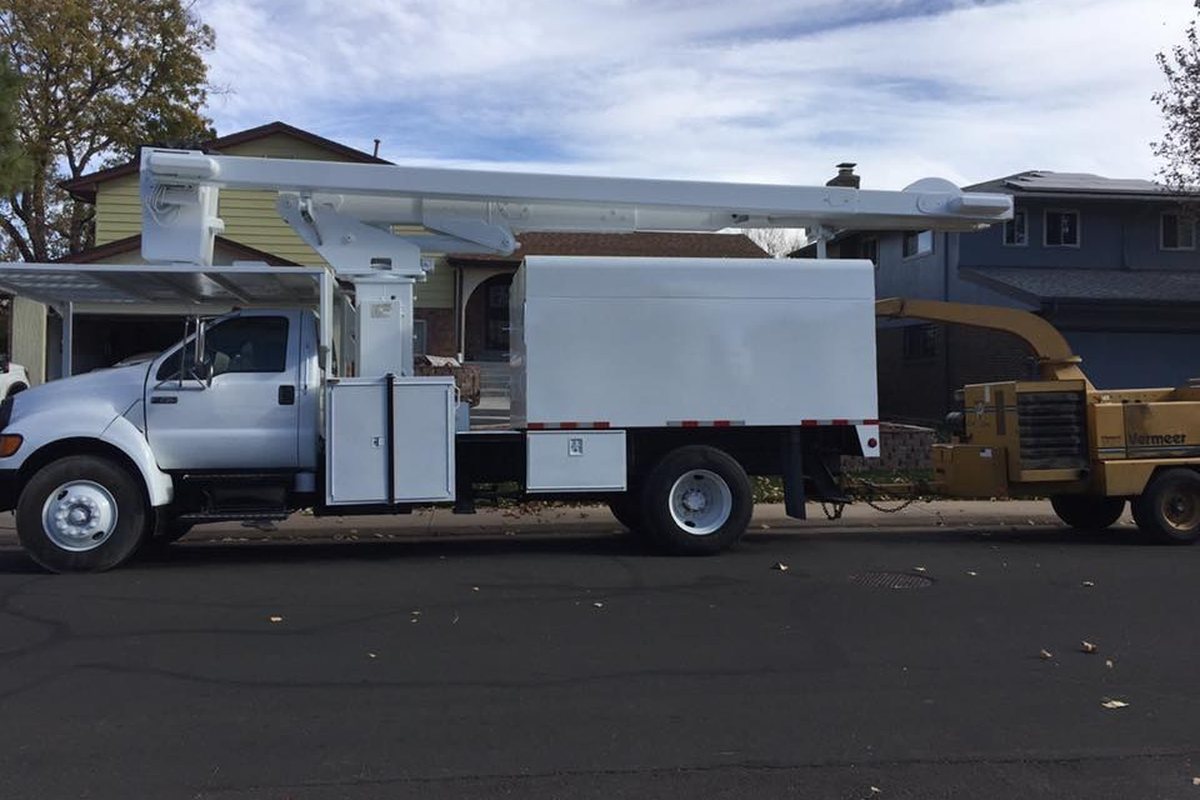
- Plan: We agree on what will be removed and why, and on how the work will be done, whether by climbing or from a bucket truck.
- Pruning: Our crew makes the cuts to ANSI A300 standards, protecting your lawn, landscaping and structures as they work.
- Cleanup: We clean up and haul away the debris so you’re left with a tidy yard.
- Follow-up advice: We’ll tell you when the tree should be looked at again. The right interval depends on the species and condition of the tree.
Do you prune shrubs and trees for homes and businesses?
Yes. We prune trees and shrubs for residential and commercial properties, including homes, HOAs and commercial sites around the Denver metro. In Aurora, see our dedicated Aurora tree service page. If a tree turns out to be beyond saving, or hazardous, we can also remove it and grind the stump. Our tree removal page explains how that works.
Frequently asked questions about tree pruning in Denver
Do you offer free estimates for tree pruning?
Yes. We look at your trees, recommend what they need and give you a free estimate before any work starts.
Do you top trees?
No. We don’t top trees. Topping leaves large wounds and encourages weak regrowth. We use methods such as crown thinning, raising and reduction instead.
How often should a tree be pruned?
It depends on the species, age and condition of the tree. Young trees often benefit from early structural pruning, while mature trees are usually pruned on a cycle of several years. An arborist can recommend a schedule after seeing your trees.
Is pruning different from trimming?
The words are often used interchangeably. In practice, pruning describes cuts made for tree health, safety and structure, while trimming is more commonly used for general tidying. Either way, we follow the same standards.
Can you handle emergency pruning after a storm?
Yes. We offer 24-hour emergency service for hazardous trees and storm damage. Call (720) 806-6378.
Are your crews licensed and insured?
Yes. We are a licensed and insured tree contractor and a member of the Tree Care Industry Association, and we work to national pruning standards (ANSI A300).
Ready to give your trees a safer shape before the next storm?
Late-season wind and heavy spring snow are when weak limbs show themselves, and a pruning visit now costs far less than a limb through a roof. Tell us which tree is worrying you, and an arborist-led crew will look at it, explain your options and give you a free estimate. Call (720) 806-6378, Monday through Friday, 8 AM to 5 PM, or reach us any time for emergency tree service.