Centennial Wasp Control: Safety Tips, Deterrents and Removal
Dealing with aggressive wasps in Centennial can be daunting. You might feel uneasy when they buzz around, especially during outdoor activities. Knowing how to respond is essential for your safety. From understanding their behavior to employing effective deterrents, there are various strategies to handle them. But what steps can you take to ensure a wasp-free environment while enjoying your time outdoors? Let’s explore some practical solutions together.
Key Takeaways
- Identify aggressive wasps like yellow jackets by their distinctive yellow and black markings and erratic flight patterns around food sources or nests.
- Wear protective clothing, such as long sleeves and gloves, before approaching any wasp nests to minimize the risk of stings.
- Use natural deterrents like peppermint or eucalyptus sprays to keep wasps away from your outdoor spaces.
- Avoid swatting at wasps; instead, remain calm and move slowly to reduce the chance of provoking them.
- If removal is necessary, do so during calm evenings or early mornings, using wasp-specific insecticides from a safe distance.
Understanding Wasp Behavior

While you might think all wasps are aggressive, understanding their behavior reveals that they often act defensively when they feel threatened.
Wasp communication patterns play a crucial role in their interactions and can help you decipher their moods. For instance, you’ll notice that during spring and summer, wasps are more active and less aggressive, focusing on building nests and gathering food.
However, as fall approaches, their **behavior changes**; they become more irritable and protective of their nests. This seasonal behavior change is essential to recognize, as it can help you **avoid confrontations**.
Identifying Aggressive Wasps
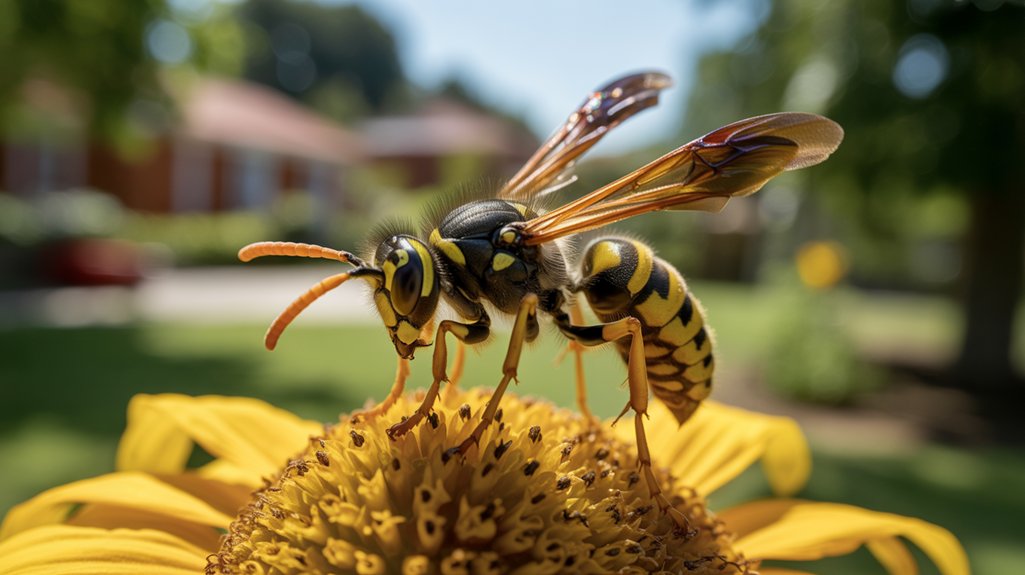
To effectively identify aggressive wasps, you should pay close attention to their physical characteristics and behaviors. For accurate visual guides and detailed information on the most common **wasp species in North America**, including yellow jackets and hornets, refer to the resources from the National Pest Management Association.
Look for aggressive species like yellow jackets and hornets, which are often more prone to defend their nests. These wasps are usually larger, with distinct markings—yellow and black or brown.
Watch for warning signs such as erratic flight patterns and hovering around food sources or nests. If you notice them swarming or becoming increasingly aggressive when you approach, it’s a clear indication that they feel threatened.
Additionally, aggressive wasps might emit a pheromone when they feel provoked, attracting others to join in defense. Being aware of these traits can help you avoid dangerous encounters with these pests.
Essential Safety Precautions
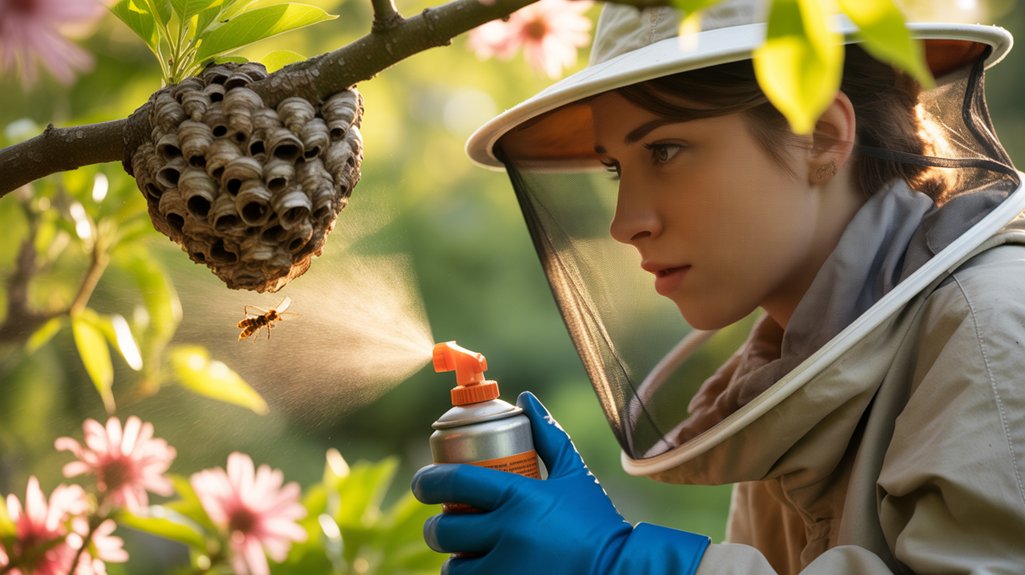
Understanding the signs of aggressive wasps is only the first step in ensuring your safety. To effectively deal with these pests, you need to take essential safety precautions.
Always wear protective gear, such as long sleeves, pants, and closed-toe shoes, to minimize the risk of stings. Since wasp stings can be serious, it is vital to be prepared; review the official **guidance on the signs, symptoms, and emergency treatment for severe stinging insect allergies** from the U.S. Centers for Disease Control and Prevention (CDC).
Here are some key safety tips:
- Avoid wearing bright colors or floral patterns that attract wasps.
- Don’t swat at wasps; this can provoke them further.
- Stay calm and move slowly if you encounter a nest.
Natural Deterrents for Wasps
If you want to keep wasps at bay, using natural deterrents can be an effective strategy.
Consider incorporating plant-based repellents like peppermint, eucalyptus, or citronella into your outdoor spaces. These plants not only smell great but also help repel wasps naturally.
You can also create your own spray by mixing water with essential oils such as clove, geranium, or lemongrass. Simply combine a few drops of the oil with water in a spray bottle and apply it around your patio or garden.
Additionally, planting marigolds or basil can **create a barrier** that deters wasps.
Effective Traps and Baits
While natural deterrents can help, using effective traps and baits is a proactive way to manage aggressive wasps around your home.
Choose trap designs that cater to wasps, ensuring they’re both effective and easy to use.
Consider using bait ingredients like:
- Sugar water or fruit juice to attract them.
- Protein-based options like tuna or chicken for specific species.
- Commercially available attractants designed specifically for wasps.
Place these traps strategically around your property, focusing on areas where you notice **wasp activity**. To better understand why wasps are present, explore the **beneficial ecological role of wasps** in controlling other insect pests and pollinating plants, as detailed by leading entomology resources.
Regularly check and replace bait to keep your traps effective.
Removing Wasp Nests Safely
Removing wasp nests safely requires **careful planning and timing**, especially since wasps can become aggressive when their homes are threatened.
To ensure successful nest removal, choose a calm evening or early morning when wasps are less active. Wear **protective clothing**, including long sleeves and gloves, to minimize the risk of stings.
Use **safe techniques** like spraying a **wasp-specific insecticide** from a safe distance, following the product’s instructions closely. If you choose to use insecticides for nest removal, always follow safety guidelines and best practices for protecting wildlife and the environment outlined by the **U.S. Environmental Protection Agency (EPA)**. Alternatively, you can use a vacuum with a special attachment to remove the nest discreetly.
After the nest is removed, seal any entry points around your home to prevent future infestations. Always remember that if the nest is large or difficult to reach, it’s best to **consult a professional** for assistance.
Professional Wasp Control Services
When dealing with an **aggressive wasp problem**, hiring professional **wasp control services** can be a smart decision.
These experts provide effective pest management solutions, ensuring your safety and peace of mind in Centennial.
Here are a few reasons to consider their services:
- Expert extermination: Professionals have the knowledge and tools to safely eliminate wasps and their nests.
- Preventive measures: They can identify potential nesting sites and offer strategies to deter wasps from returning.
- Time savings: You won’t have to spend hours researching or attempting DIY methods, allowing you to focus on other priorities.
Tips for Outdoor Gatherings
After addressing an **aggressive wasp issue** with professional help, you might be planning **outdoor gatherings** and wondering how to keep them enjoyable and safe.
First, choose your **outdoor food wisely**; opt for less sugary options and cover dishes when not in use. This minimizes the attraction for wasps.
Encourage **guest awareness** by informing everyone about potential wasp activity. Set up your seating away from known nests or areas where wasps are likely to gather.
Consider providing guests with a **designated area for food**, making it easier to monitor and manage wasp encounters.
Finally, keep trash bins sealed and clean up any spills quickly. With these tips, you can enjoy your outdoor gathering while minimizing the chances of wasp disruptions.
Long-term Wasp Prevention Strategies
To effectively **prevent wasps** from becoming a nuisance in your outdoor spaces in Centennial, it’s essential to take proactive measures throughout the year.
Focus on **seasonal maintenance** and regular property inspections to minimize the risk of wasp infestations. To take a proactive, long-term approach, learn how to keep all pests, including wasps and other nuisance wildlife, out of your home by following the comprehensive **pest-proofing tips** from the Colorado State University Extension.
Here are some strategies to consider:
- **Seal entry points**: Inspect your home for gaps or cracks where wasps might enter and seal them.
- **Remove food sources**: Keep outdoor trash bins closed and clean up spills promptly to avoid attracting wasps.
- **Trim vegetation**: Regularly cut back overgrown plants and shrubs where wasps may nest.
Frequently Asked Questions
What Are the Signs of a Wasp Infestation in My Home?
If you suspect a wasp infestation, look for visible wasp nests around your home, often in sheltered areas like eaves or attics. You might also notice increased wasp activity near these nest locations.
Can Wasps Sting Multiple Times?
Yes, wasps can sting multiple times due to their sting patterns. Unlike bees, which leave their stingers behind, wasps exhibit aggressive behavior and can repeatedly attack, making them particularly dangerous when threatened.
Are There Any Allergies Related to Wasp Stings?
Yes, some people can develop allergy symptoms from a wasp sting. These symptoms may include swelling, hives, difficulty breathing, or even anaphylaxis. If you’re allergic, it’s crucial to seek medical attention immediately after a sting.
How Do Weather Conditions Affect Wasp Behavior?
Weather conditions greatly influence wasp behavior. During colder temperatures, wasps enter hibernation patterns, becoming less active. Warmer weather prompts increased activity, making them more aggressive as they search for food and establish nests. Stay alert!
What Time of Year Are Wasps Most Aggressive?
Wasps are most aggressive during the late summer peak and into the fall season. As their food sources dwindle, they become more defensive, so it’s crucial to be cautious during these times to avoid encounters.
Dealing with aggressive wasps in Centennial doesn’t have to be daunting. By understanding their behavior and taking essential safety precautions, you can minimize risks. Use natural deterrents and effective traps to keep them at bay, and don’t hesitate to call in professionals if needed. Remember, staying calm is key. With these strategies, you can enjoy your outdoor spaces without the worry of wasp encounters. Stay safe and keep your gatherings wasp-free!
For accurate visual guides and detailed information on the most common wasp species in North America, including yellow jackets and hornets, refer to the resources from the University of Maryland.
For comprehensive year-round defense against pests beyond wasps, consult our definitive guide on Seasonal Pest Control in Centennial: A Complete Homeowner’s Guide to ensure your property remains protected through every season.