Summer Tree Trimming Tips for Denver
Summer tree trimming in Denver requires scheduling work during cooler morning hours to reduce heat stress on trees. Above and Beyond Services recommends pruning dead or crossing branches first. Sealing larger cuts to protect against Denver’s intense summer sun and pest infestations.
Summertime tree trimming in Denver requires careful timing. The city’s unpredictable climate and strong summer storms make strategic pruning essential for tree health and safety. Focus on removing dead or damaged branches during summer while avoiding heavy pruning that stresses trees. Watch for threats like emerald ash borer and mountain pine beetle common to the Denver region.
Summertime tree trimming in Denver requires careful timing due to the city’s unpredictable climate and strong summer storms. Pruning during summer removes dead or storm-damaged limbs before they become hazards. Denver trees also face threats from pests like emerald ash borer. Mountain pine beetle, making prompt, Top Signs Your Trees Need Pruning: Keep Your Landscape Healthy and Attractive for long-term tree health.
Key Takeaways
- Summer pruning in Denver works best when done after the spring growth flush fully hardens off.
- Removing dead or crossing branches during July reduces storm damage risk by improving tree structure.
- Denver’s 2 most destructive tree pests, emerald ash borer and mountain pine beetle, spread faster through stressed, unpruned trees.
- Above and Beyond Services recommends trimming no more than a notable share of live canopy per season.
What Do You Need Before Trimming Trees?
**Tree trimming in Denver** requires specific preparation steps before any cutting begins. Denver’s unpredictable winters and strong summer storms create conditions that make thorough pre-trimming assessment essential — skipping preparation risks permanent damage to trees already stressed by an arid climate.
Most trees in Denver are not native species. Planted trees in Denver’s dry environment demand extra care to survive. Thrive, meaning careless trimming without proper groundwork accelerates decline rather than promoting health.
What prerequisites should property owners address before trimming begins?
Complete these steps before trimming any tree on a Denver property:
- Assess tree health — Inspect for signs of disease, pest damage, or structural weakness that could affect how and where cuts are made.
- Identify the species — Non-native species planted in Denver’s arid climate have different pruning tolerances; confirm the species before selecting a trimming approach.
- Check local regulations — Denver municipal codes govern tree work near power lines and public rights-of-way; verify permit requirements in advance.
- Gather proper tools — Ensure all cutting equipment is clean, sharp, and appropriate for the branch diameter being removed.
- Establish a safety perimeter — Clear the work zone of people, pets, and obstacles before the first cut.
When should property owners call a professional service?
Above and Beyond Services provides professional tree trimming to Denver homeowners and businesses when structural complexity, height. Tree health concerns exceed safe DIY scope. Licensed professionals assess risk factors that untrained property owners routinely overlook, preventing costly damage.
When Is the Right Time to Trim?
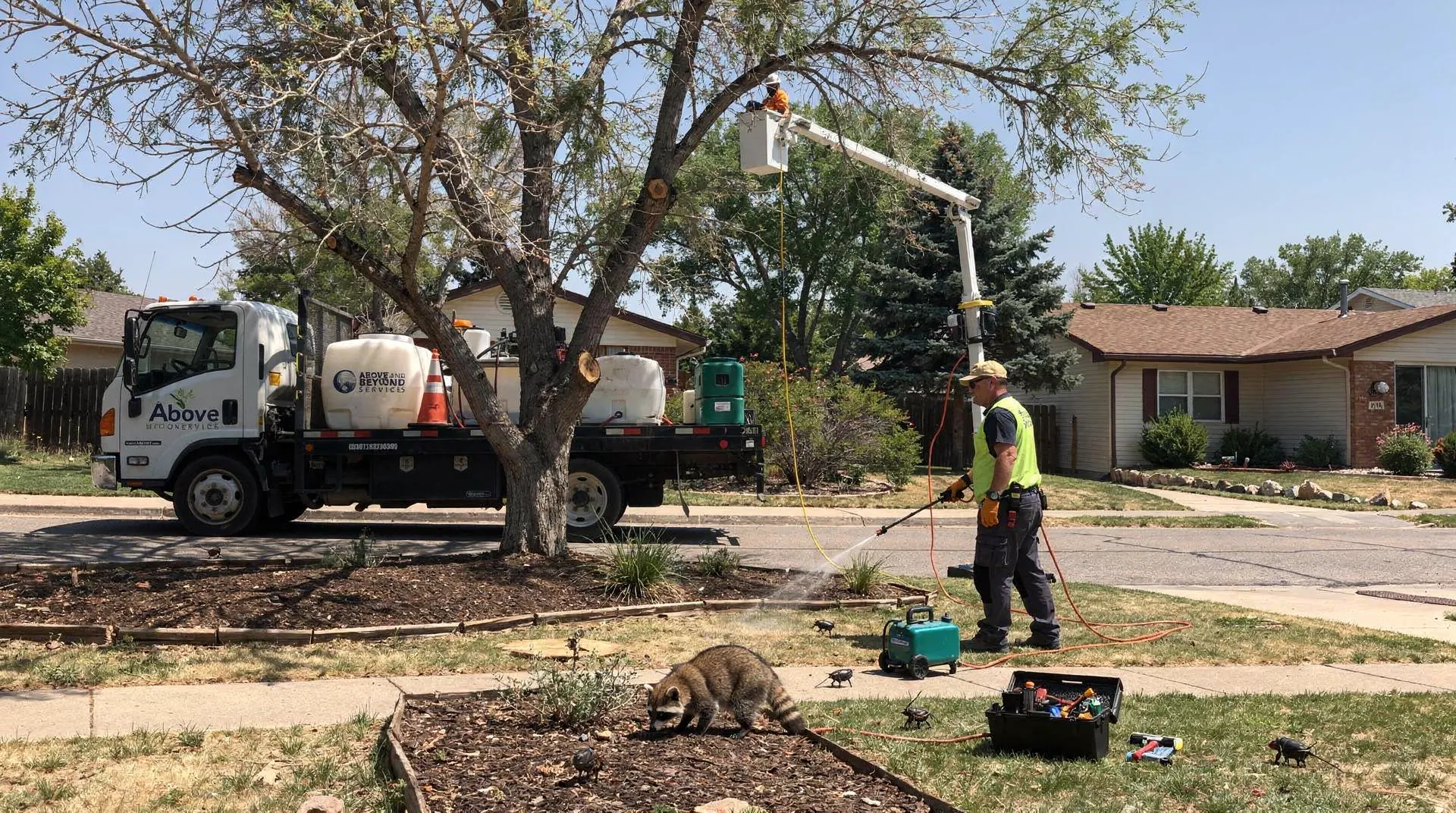
Tree trimming in Denver demands more than a glance at the calendar — timing directly shapes tree health, structural integrity, and long-term vitality. Pruning at the wrong moment exposes trees to stress, disease, and weakened growth that property owners cannot easily reverse.
Denver’s climate adds a layer of complexity. Hot summer months bring drought stress, a prevalent challenge that causes premature leaf drop and weakens tree health overall. Trees already strained by heat and dry conditions are far less equipped to recover from pruning wounds. Scheduling trimming work outside these high-stress periods reduces the risk of compounding damage.
Proper pruning promotes not only safety but also vigorous growth and aesthetic beauty. Outcomes that depend entirely on selecting the right conditions before any cut is made.
What Should Property Owners Do Before Scheduling a Trim?
Before contacting a service provider, property owners should assess visible signs of stress, such as wilting foliage or premature leaf drop. Above and Beyond Services travels to Denver. Evaluates each tree’s condition to determine whether timing is appropriate for pruning work.
Follow these steps to approach trimming decisions correctly:
- Observe the tree for signs of drought stress, including leaf discoloration or early drop.
- Avoid scheduling cuts during peak summer heat when trees are already under environmental strain.
- Confirm the tree’s overall health is stable enough to support recovery after pruning.
- Contact a qualified provider serving Denver to assess site-specific conditions before work begins.
Does Tree Species Affect the Best Trimming Window?
Species characteristics influence how and when trimming produces the best results. Timing decisions are not universal — each tree’s biology, combined with Denver’s unpredictable climate, determines the safest pruning window. A qualified arborist evaluates both factors before recommending a schedule.
How Do You Execute Summer Trimming Correctly?
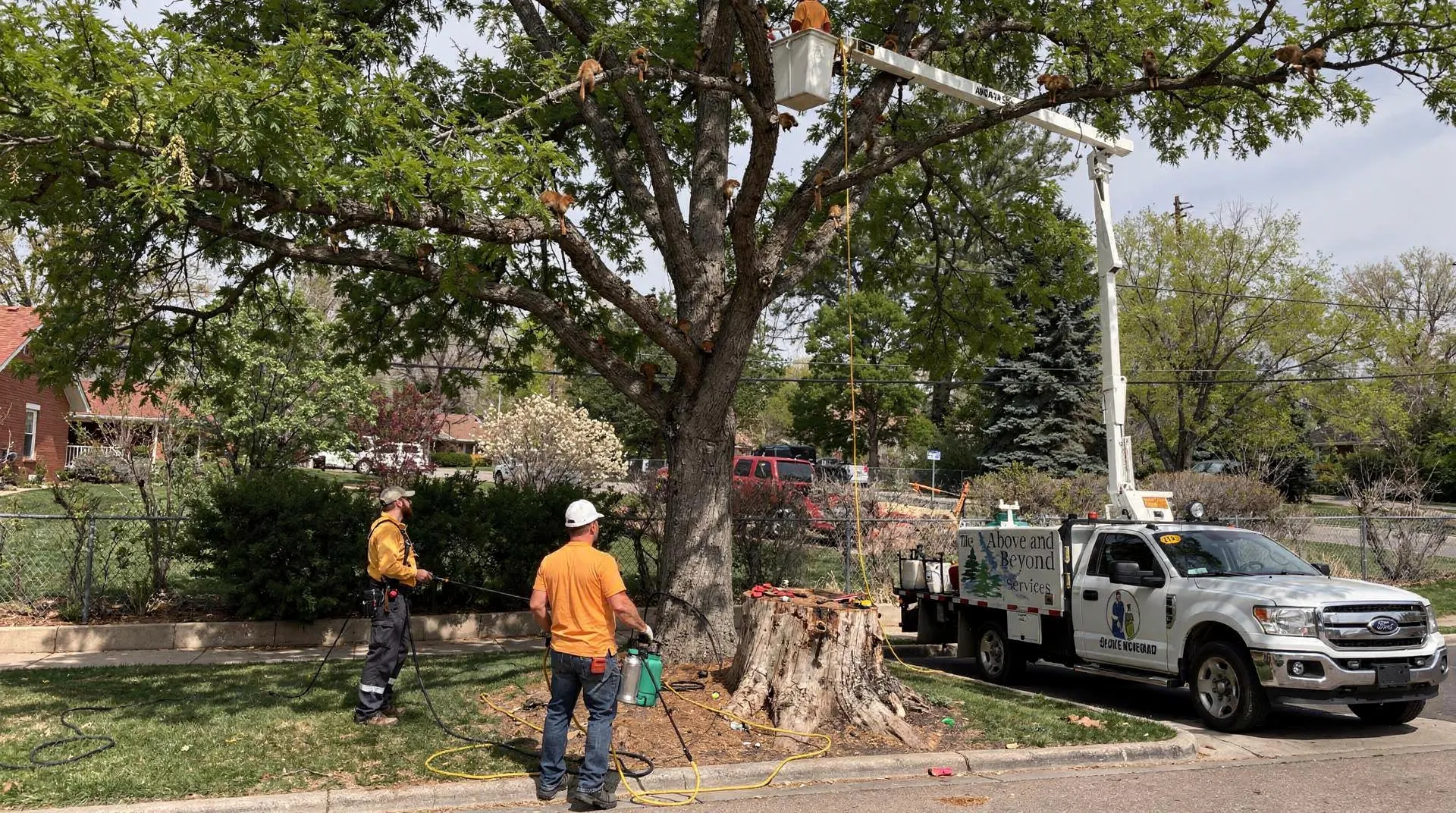
Tree trimming in Denver demands a disciplined, step-by-step approach that prioritizes long-term tree health over cosmetic results. Skipping proper procedure during summer exposes Denver landscapes to drought stress, structural failure, and pest vulnerability — losses that cost property owners far more than a professional service call.
Pruning is not simply about cutting back branches. Pruning helps trees grow strong and prevents future problems before they escalate. Homeowners who treat trimming as a cosmetic task miss the structural and biological purpose behind every cut.
What Prerequisites Should Property Owners Address Before Trimming?
Before any cutting begins, property owners must assess soil moisture levels and confirm irrigation is functioning correctly. Denver’s hot summer months accelerate moisture loss. Effective irrigation combined with mulching retains soil moisture and supports tree resilience throughout the season. Addressing these conditions before trimming reduces transplant shock and post-cut stress.
What Steps Produce Correct Summer Trimming Results?
Executing summer trimming correctly requires following these steps in order:
- Inspect the tree for dead, damaged, or crossing branches that compromise structural integrity.
- Sterilize all cutting tools before use to prevent the transfer of pathogens between trees.
- Remove dead and diseased wood first, cutting back to healthy tissue at a slight angle just outside the branch collar.
- Limit live-wood removal to avoid over-pruning, which stresses trees during peak heat.
- Apply mulch around the base after trimming to retain soil moisture and regulate root temperature.
- Monitor the tree in the weeks following trimming for signs of drought stress or pest activity.
From understanding optimal timing to employing the right tools and techniques, several vital steps protect Denver landscapes comprehensively. Above and Beyond Services specializes in tree trimming, removal, and plant health care to keep Denver landscapes thriving. Providing property owners with expert guidance across every stage of this process.
How Do You Manage Pests During Summer Trimming?
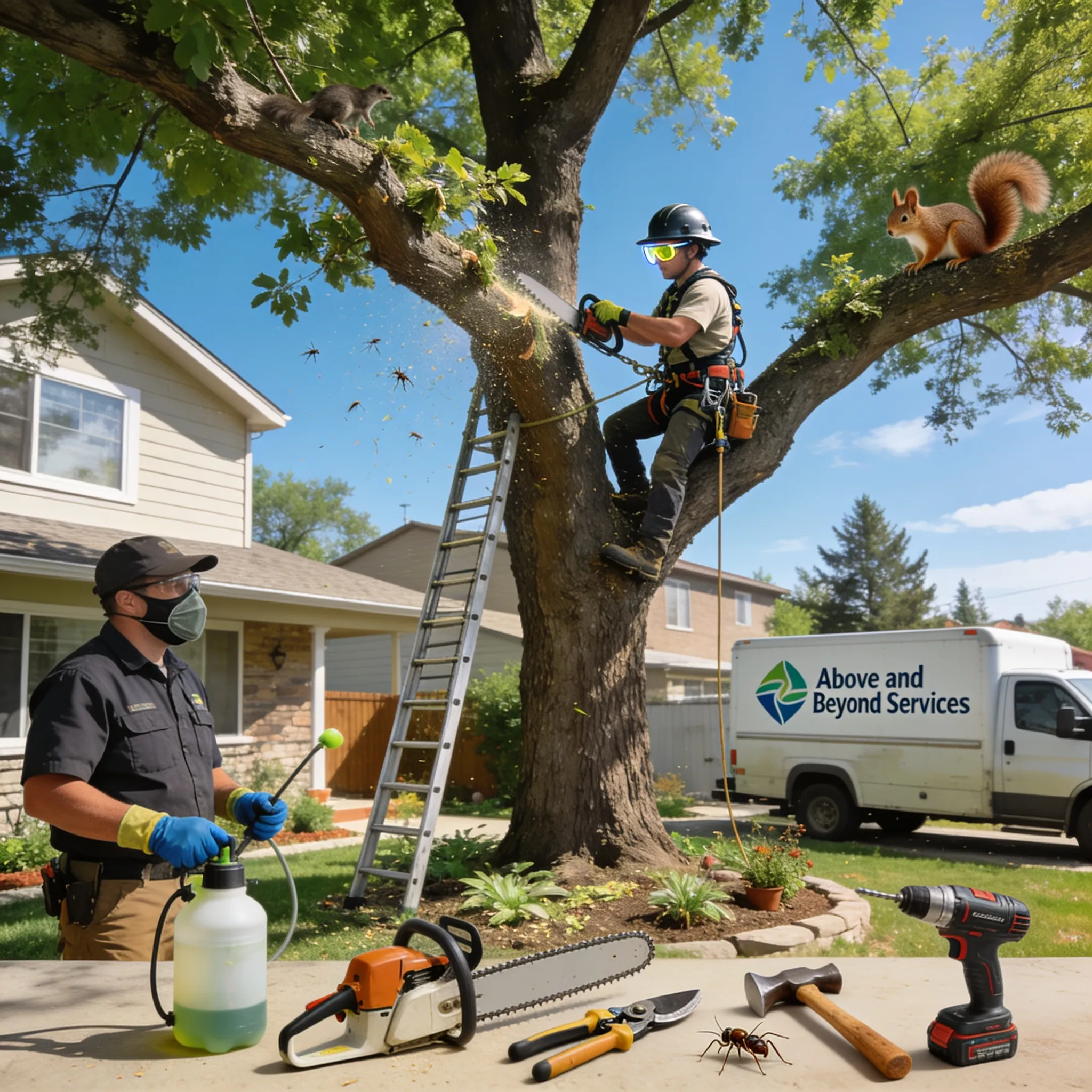
Managing pests during summer trimming requires identifying active infestations before cutting begins. Applying targeted treatments at each stage of the process. Unmanaged pest infestations — particularly emerald ash borer and mountain pine beetle. Devastate tree populations across Denver, turning a routine trimming session into an accelerated path toward irreversible tree loss.
Tree trimming in Denver creates fresh wound sites that attract opportunistic insects. Without a coordinated pest management protocol, those entry points become vectors for deeper infestation, shortening tree lifespans and increasing removal costs for property owners.
What Steps Should Arborists Follow to Control Pests During Trimming?
Prerequisite: Confirm the tree species and inspect for visible signs of infestation — exit holes, pitch tubes, or discolored bark — before any cutting begins.
- Assess the canopy for pest activity, flagging compromised branches for priority removal.
- Remove and dispose of infested wood immediately; do not leave cut material on-site where insects can spread to neighboring trees.
- Apply targeted pest management treatments to exposed cut surfaces and surrounding bark to interrupt pest life cycles.
- Document findings and schedule a follow-up inspection to confirm treatment effectiveness.
Why Is Professional Plant Health Care Important After Trimming?
Trimming alone does not eliminate an active infestation. Above and Beyond Services provides professional plant health care services designed specifically for local Denver conditions, delivering targeted solutions that prevent widespread damage and promote long-term tree longevity. Coordinating pest management with the trimming schedule — rather than treating the two as separate tasks. Produces measurably better outcomes for Denver landscapes.
What Mistakes Should Denver Homeowners Avoid?
Denver homeowners most commonly damage their trees by neglecting proper pruning practices and underestimating the economic, environmental. Emotional value trees bring to a property. Improper tree trimming in Denver causes lasting structural harm, reduces property value. Accelerates tree decline — losses that far outweigh the cost of professional care.
Why Is Overlooking Proper Pruning Such a Costly Error?
Proper pruning is easy to overlook when homeowners consider comprehensive tree care. Skipping or mishandling pruning cuts leads to disease entry points, weak branch structure, and hazardous limb failure. Trees are economically, environmentally, and emotionally valuable assets — damage from improper trimming erodes all three dimensions simultaneously. Correcting poor pruning work typically costs significantly more than preventive professional service.
What Steps Should Denver Homeowners Follow to Avoid These Mistakes?
Before beginning any trimming work, homeowners should assess tree species, seasonal timing, and the structural condition of each tree.
- Identify the correct pruning season for each tree species present on the Denver property.
- Inspect all branches for signs of disease, pest activity, or structural weakness before making any cuts.
- Use sharp, clean tools appropriate to branch diameter to prevent ragged wounds that invite infection.
- Avoid topping trees — removing the central leader destroys natural form and weakens long-term structural integrity.
- Engage a qualified professional when branches exceed safe handling capacity for an untrained individual.
Above and Beyond Services brings a dedicated team to Denver properties, delivering expert tree trimming with the professional precision that protects trees for the long term.
Summertime tree trimming in Denver demands a disciplined, informed approach. One that respects the region’s climate, the biology of each species, and the safety of the surrounding property. By timing cuts strategically, prioritizing structural integrity. Enlisting licensed professionals, property owners protect their investment and support long-term tree health. Above and Beyond Services brings the expertise. Local knowledge necessary to execute these practices with precision, ensuring Denver landscapes remain both beautiful. Resilient throughout the season and beyond.
FAQ
When is the best time to trim trees in Denver during summer?
Summer pruning works best after the spring growth flush fully hardens off, giving trees the structural stability needed to handle cuts without added stress.
How much of a tree’s canopy is safe to remove in one season?
Above and Beyond Services recommends removing no more than a notable share of live canopy per season to protect tree health.
Why does summer trimming matter for pest control in Denver?
Emerald ash borer and mountain pine beetle spread faster through stressed, unpruned trees, making prompt trimming essential for protecting Denver trees from these destructive pests.